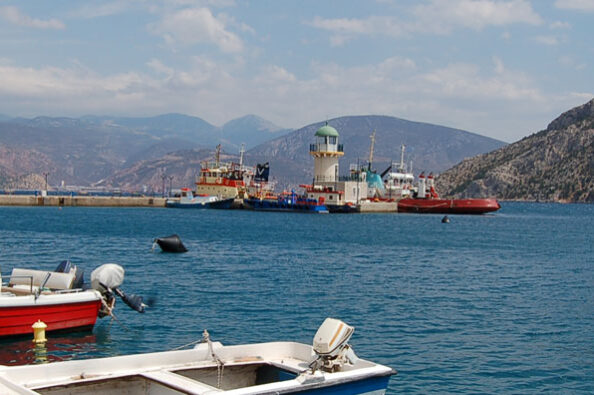


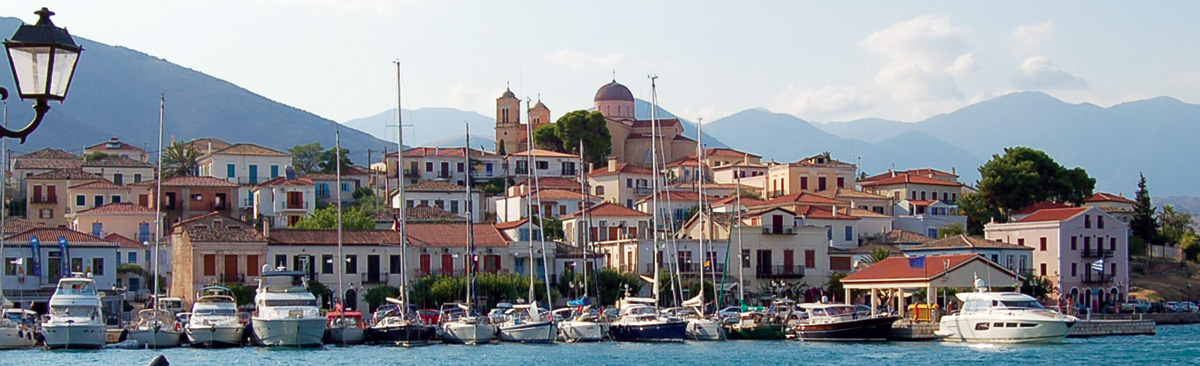
Along the northern shores of the Korinthiakos Gulf, where the mountains of Phocis and Boeotia descend steeply to the sea, lie a series of natural harbours that have quietly witnessed the passage of Greek history for more than three millennia. From the sheltered waters of the Gulf of Antikyra in the east to the deep and protected Krissaios Gulf, where Galaxidi and Itea stand today, this coastline has long served as both a maritime refuge and a gateway to the interior of Central Greece.
In antiquity these waters were closely linked with the sanctuary of Delphi, the spiritual heart of the ancient Greek world. Ships arriving from across the Mediterranean anchored in nearby ports such as Kirra and Antikyra, bringing pilgrims, merchants, and envoys who travelled inland to consult the oracle of Apollo. The gulf therefore functioned not merely as a stretch of coastline but as a maritime approach to Delphi, shaping the prosperity and importance of the settlements along its shores.
During the Byzantine and medieval periods, the region continued to play a strategic role as a coastal corridor connecting the Peloponnese, Central Greece, and the wider Aegean. Harbours evolved, settlements shifted, and new communities emerged, particularly during the later centuries when Galaxidi developed into one of Greece’s most notable seafaring towns, its captains and shipowners trading throughout the Mediterranean and beyond.
Today the northern Korinthiakos retains this layered character: a coastline where ancient harbours, Byzantine fortifications, and proud maritime towns coexist with modern ports and quiet fishing villages. The histories that follow explore these places individually—each harbour, town, and bay revealing its own chapter in the long maritime story of the Korinthiakos Gulf.