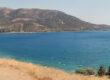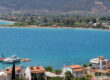


View of the waterfront in Galaxidi
Nestled on the northern shores of the Corinthian Gulf, opposite the Peloponnesian coast of Trizonia, Galaxidi stands as one of Greece’s most evocative maritime towns — a place where the salt of the sea seems to mix with centuries of history. The serene harbor, with its neoclassical houses and cobblestone lanes, conceals a past far older and more turbulent than its tranquil beauty suggests.
Antiquity: From Chaleion to Galaxidi
The story of Galaxidi begins in antiquity. The ancient city of Chaleion, a member of the Ozolian Locrians, once stood nearby, flourishing from the 7th century BCE. Ancient authors like Thucydides and Strabo mention the Locrians as hardy seafarers and warriors who inhabited this stretch of coast. Chaleion controlled the sea routes of the Corinthian Gulf, serving as a port for the hinterland and a base for trade and fishing.
Archaeological evidence — fragments of fortifications, inscriptions, and pottery — found around today’s Galaxidi confirms the existence of a well-organized settlement that maintained contact with Corinth, Delphi, and Aetolia. During the Classical period, the Locrians joined the Aetolian League, a political and military alliance that resisted both Macedonian and Roman encroachments. Yet when Rome emerged as the new Mediterranean power, the area fell under its sway, and Galaxidi’s forerunner declined into a quiet harbor community.
Byzantine and Medieval Galaxidi: From Fisher Village to Fortress Town
In the Byzantine era, Galaxidi gradually reappeared as a fortified settlement — mentioned in 10th-century sources as Galaxidion. Its name possibly derived from a local family or from “galaxa,” meaning “milk,” perhaps referring to the calm, milky-blue waters of its bay. Its sheltered location made it an ideal refuge for fishermen and sailors during an age of piracy and instability.
By the 12th century, Galaxidi had developed into a small but vital maritime station, linked with the regional centers of Naupaktos and Delphi. Byzantine records note its shipyards and the construction of coastal watchtowers to protect from Arab and Norman raids. The remains of the medieval walls that crown the hill above the old port bear silent witness to that era.
After the Fourth Crusade and the division of the Byzantine Empire in 1204, Galaxidi came under Frankish, and later Epirote control, before falling to the Catalans and then the Ottomans. Each new ruler left their mark — administrative, linguistic, or architectural — but the town’s spirit remained defiantly Greek and seafaring.
Ottoman Rule and the Rise of a Maritime Power
During the long Ottoman centuries, Galaxidi’s fortunes followed the tides of empire. Initially subdued, it gradually rose to prominence again in the 17th and 18th centuries, thanks to its shipbuilding and navigation. Its inhabitants, mostly Christian Greeks, were skilled mariners who built sleek vessels known as “brigs” and “schooners”, capable of traversing the Mediterranean.
Protected by local autonomy and privileges (often secured through bribes or diplomacy), Galaxidi became a prosperous shipping center, trading in timber, oil, wine, and grains. The local shipyards, using the oak forests of Parnassos, built some of the finest wooden ships in Greece. Galaxidi’s captains ventured as far as Trieste, Livorno, and Marseilles, creating a network of maritime connections that made the small town a miniature republic of the sea.
Revolution and Destruction
When the Greek War of Independence broke out in 1821, Galaxidi was among the first towns of Central Greece to rise against Ottoman rule. Its fleet, though modest in size, played a heroic role, supplying arms, transporting troops, and participating in naval battles alongside the ships of Hydra, Spetses, and Psara.
But Galaxidi’s courage came at a terrible price. In 1821 and again in 1825, the town was burned to the ground by Ottoman forces, its people slaughtered or scattered. Contemporary accounts describe an inferno that left little standing but the church foundations and the stubborn hope of its survivors. The town’s merchants and captains, many of whom fled to the islands and later returned, rebuilt Galaxidi from ashes, giving it the architectural form we see today — elegant stone houses with wooden balconies, painted doors, and maritime motifs.
The 19th Century Golden Age
After independence, Galaxidi entered its golden age. By the mid-19th century, it possessed one of the largest merchant fleets in Greece, second only to Syros and Hydra. Its ships carried Greek flags across the Mediterranean and the Black Sea, and Galaxidi’s sailors became famous for their discipline and skill. Wealth from the sea funded schools, mansions, and the beautiful churches of Agios Nikolaos and Agia Paraskevi, the latter known for its carved zodiac circle on the floor.
This was the era of proud sea captains and adventurous voyages. The local dialect absorbed Italian and French nautical terms, and the town pulsed with cosmopolitan energy. Yet this prosperity could not withstand the age of steam. By the late 19th century, the shift from sail to steamships left Galaxidi’s wooden fleet obsolete. One by one, its vessels were sold or dismantled, and many families emigrated to Piraeus or abroad.
Modern Galaxidi: Memory and Revival
Though the age of sail faded, Galaxidi never lost its soul. In the 20th century, the town reinvented itself as a haven of culture and nostalgia. Its preserved neoclassical architecture and maritime heritage attracted artists, writers, and travelers seeking the romance of old Greece. The Maritime Museum, one of the oldest in the country, displays charts, portraits, and models of ships that tell the story of a proud maritime community.
Today, Galaxidi retains the quiet dignity of its seafaring past. Each Clean Monday (Kathara Deftera), the town revives the unique “Alevromoutzouromata” festival — a joyful, colorful battle of flour and laughter that fills the narrow lanes with clouds of color, echoing both ancient carnival traditions and the irrepressible spirit of its people.
Sights
Historic Maritime Town of Galaxidi
Galaxidi was one of the most important maritime centres of Greece during the 18th and 19th centuries, with a large fleet of merchant sailing ships trading across the Mediterranean. The town still preserves its traditional atmosphere, with captains’ mansions, narrow stone lanes, and two natural harbours — the main harbour and the sheltered inlet of Hiōna.
Galaxidi Maritime Museum
One of the oldest maritime museums in Greece, presenting the town’s remarkable seafaring heritage. Highlights include ship models, navigational instruments, and historic nautical documents, as well as the famous mural depicting sailing ships of the 18th century.
Church of Agios Nikolaos
The impressive church dedicated to the patron saint of sailors stands above the harbour. Inside are magnificent carved wooden icon screens and large chandeliers, while the elevated position offers splendid views over the Corinthian Gulf.
Walk around Hiona Harbour
This small peninsula forms one of the two natural harbours of Galaxidi. A pleasant waterfront walk passes neoclassical houses and former captains’ residences, creating one of the most picturesque settings along the Corinthian coast.
Delphi and Itea
Within easy reach of Galaxidi are the famous archaeological site of Delphi, one of the most important sanctuaries of ancient Greece, and the coastal town of Itea, which serves as its modern harbour. The excursion beautifully combines history, mountain landscapes, and the sea.
Flavours
Corinthian Gulf Prawn Pasta
Local tavernas often serve fresh prawns and seafood from the Corinthian Gulf, commonly prepared as prawn pasta with tomato, olive oil, and herbs.
Grilled Fish and Seafood Meze
Fish tavernas specialise in fresh fish, squid, and octopus, typically grilled and served with salads and local wine.
Phocis Olives and Olive Oil
The surrounding countryside is rich in olive groves, producing excellent table olives and aromatic olive oil that accompanies many local dishes.
Roumeli Regional Pies
The inland areas of central Greece maintain a strong tradition of handmade pies, prepared with thin pastry and fillings such as cheese, greens, or leeks.
Honey and Walnut Desserts
Cafés and tavernas often offer traditional sweets, including walnut cake, spoon sweets, and desserts made with local honey.