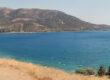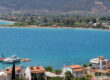


View of Itea, from E
Nestled on the northern coast of the Gulf of Corinth, Itea is a small town whose modern charm belies a rich and layered history that stretches back to antiquity. Its geographical location, at the foot of Mount Parnassus and near the famed sanctuary of Delphi, has long made it a significant site for both commerce and culture.
Ancient Times
The area surrounding Itea was inhabited since prehistoric times, with archaeological evidence suggesting small settlements during the Neolithic and Bronze Ages. By classical antiquity, Itea was part of the territory of ancient Phocis, a region known for its strategic importance in central Greece. Its proximity to Delphi—the religious heart of the Greek world—meant that Itea functioned as a coastal gateway, facilitating the transport of goods, pilgrims, and sacred offerings to the oracle of Apollo.
Although Itea itself is scarcely mentioned in ancient texts, its harbor likely played a role in the trade networks of the Phocian League, linking the interior of Greece to the wider Mediterranean. The nearby plains were fertile, supporting olive cultivation, grain production, and vineyards, while the mountains provided timber and pasture. Its maritime accessibility allowed it to act as a minor yet essential node in regional commerce.
Roman Period
Following the Roman conquest of Greece in the 2nd century BCE, Itea, like much of Phocis, came under Roman administration. The Pax Romana brought relative stability and encouraged economic growth. The town’s port facilitated the export of local produce, including olive oil and wine, to other parts of the Roman Empire. Roman engineers are believed to have improved local roads and harbors, integrating Itea more efficiently into the imperial network.
While Itea remained overshadowed by nearby Delphi, Roman travelers likely used the harbor town as a resting point en route to the sacred precincts. Archaeological finds, including coins and ceramics, indicate that the town enjoyed modest prosperity during this period.
Byzantine Era
With the fall of the Western Roman Empire and the rise of Byzantium, Itea remained a part of the Eastern Roman (Byzantine) Empire. During the early Byzantine era, the town’s role shifted toward defense and maritime support. The region faced periodic raids by pirates and foreign invaders, making coastal settlements like Itea vulnerable but also strategically important.
Byzantine records suggest that the surrounding Phocis region was sparsely populated, with communities relying on agriculture, fishing, and small-scale trade. Itea’s harbor was used for naval patrols, and local fortifications may have existed to protect both the port and the interior roads leading to Delphi. Churches and monasteries established in the area attest to the enduring Christian presence, which became a cornerstone of community life.
Medieval and Ottoman Periods
During the medieval period, Itea, like much of central Greece, experienced the ebb and flow of competing powers. The region fell under Frankish, Catalan, and later Venetian influence, each leaving subtle marks on the local economy and culture. The town remained relatively small, its significance largely tied to its proximity to Delphi, which continued to attract pilgrims and travelers.
With the Ottoman conquest in the 15th century, Itea was incorporated into the empire’s administrative system. The Ottoman era brought relative stability, though economic development remained limited. Itea’s population engaged primarily in fishing, olive cultivation, and small-scale trade. The town’s location on the Gulf of Corinth kept it connected to regional maritime routes, and occasional shipbuilding activities supported the local economy.
Despite Ottoman domination, the local Greek population maintained their language, customs, and Orthodox faith, preserving a sense of continuity that would later fuel the struggles for independence.
Modern Era and the Greek War of Independence
The 19th century brought dramatic changes to Itea and its surroundings. The Greek War of Independence (1821–1829) saw the Phocis region rise against Ottoman rule. Itea’s harbor, though small, became a focal point for the transport of supplies and troops. The town itself witnessed periods of occupation, resistance, and eventual liberation.
After independence, Itea gradually developed into a more structured settlement. The late 19th and early 20th centuries saw modest urban growth, with the construction of schools, churches, and municipal buildings. Its harbor continued to serve local needs, and Itea became a point of departure for pilgrims and tourists visiting the newly accessible archaeological site of Delphi.
20th Century Development
The 20th century transformed Itea from a modest fishing and trading town into a regional hub of commerce and tourism. Modern infrastructure, including improved roads, port facilities, and public services, encouraged growth. Agriculture, particularly olive oil and citrus production, remained important, but the town increasingly relied on its role as a gateway to Delphi, attracting visitors from Greece and abroad.
Itea’s picturesque harbor, lined with cafés, tavernas, and neoclassical buildings, became a popular stop for travelers exploring the Gulf of Corinth. The town also served as a regional center for education and healthcare, gradually integrating modern amenities while preserving its traditional character.
Contemporary Itea
Today, Itea is celebrated for its blend of history, natural beauty, and cultural vitality. The town hosts seasonal festivals, maritime events, and archaeological excursions, reflecting both its ancient heritage and modern lifestyle. Walking along the harbor, visitors can sense the layers of history—from the ancient Phocian traders to Roman merchants, Byzantine mariners, and Ottoman-era fishermen—all contributing to the town’s unique identity.
Sights
Itea Waterfront
Itea stretches along a broad shoreline of the Corinthian Gulf, serving as the natural harbour of nearby Delphi. Its palm-lined promenade, cafés, and tavernas create a pleasant seaside setting with open views across the gulf.
Delphi
Just a short drive from Itea lies the famous archaeological site of Delphi, one of the most important sanctuaries of the ancient Greek world. The Sanctuary of Apollo, the theatre, and the stadium recall the time when the oracle served as a spiritual centre for all Greece.
Krisa Plain and the Amfissa Olive Grove
The plain surrounding Itea forms part of the historic Amfissa Olive Grove, one of the oldest and largest continuous olive groves in Greece. With hundreds of thousands of olive trees, the landscape reflects the agricultural heritage of the ancient city of Krisa.
Galaxidi
A short distance to the west stands the traditional maritime town of Galaxidi, with captains’ mansions, two natural harbours, and a rich seafaring history. A visit offers picturesque harbour walks and glimpses of Greece’s sailing past.
Monastery of Hosios Loukas
Further inland lies the Byzantine Monastery of Hosios Loukas, a UNESCO World Heritage site. The monastery is renowned for its remarkable mosaics and impressive middle-Byzantine architecture.
Flavours
Fresh Fish and Seafood of the Corinthian Gulf
Tavernas in Itea are well known for fresh fish, squid, and prawns from the Corinthian Gulf, often grilled simply and served as seafood meze by the water.
Prawn Pasta
A favourite local dish is prawn pasta, prepared with fresh prawns, tomato, olive oil, and aromatic herbs.
Amfissa Olives
The region produces the famous Amfissa olives, large and fleshy table olives that accompany many traditional meals.
Roumeli Regional Pies
Central Greece maintains a strong tradition of handmade pies, with thin pastry and fillings such as cheese, greens, or leeks.
Honey and Walnut Desserts
Local cafés often serve spoon sweets, walnut cake, and honey-based desserts, usually enjoyed with a cup of Greek coffee.