Ierissos

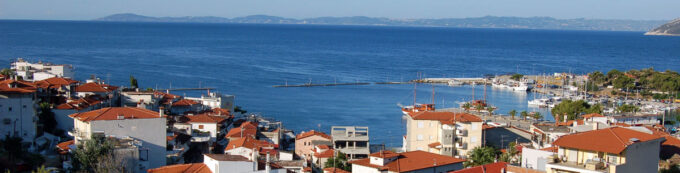
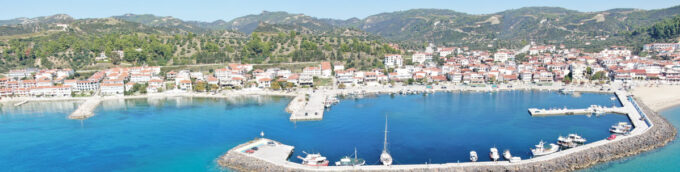
Ierissos gulf and harbour From prehistoric ground to early Greek city-ports Modern Ierissos stands beside the site of Ancient Akanthos (Acanthus), a major city-port founded in the 7th century BC, traditionally linked to settlers from Andros. Its position—on a ridge just above the shore—gave it both a defensible acropolis and immediate access to the sea…
Strymonian Gulf

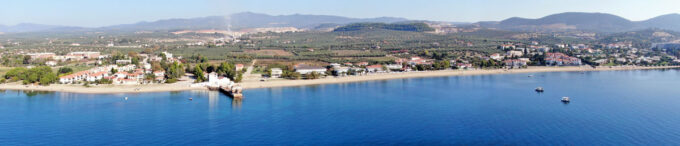
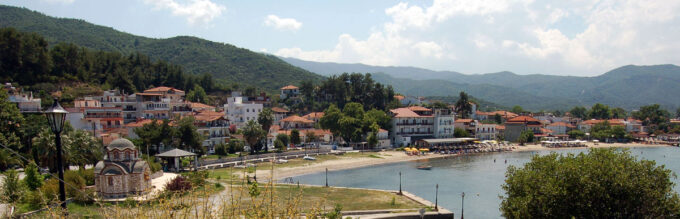
The gentle slopes of Strymonikos (Olympiada) The Strymonian Gulf has, since antiquity, formed a natural maritime crossroads between Macedonia, Thrace, and Chalkidiki. Its gentle coastline, sheltered bays, and the mouth of the Strymon River created ideal conditions for navigation, trade, and permanent settlement. From prehistoric times, the area functioned as a transitional zone between land…

Ouranoupoli and Ammouliani

Ouranoupoli tower The area of modern Ouranoupoli and Ammouliani has long stood at the threshold between land and sea, but also at the boundary between the secular world and the monastic realm. From antiquity to modern times, the gulf of Ierissos and the maritime passages towards Mount Athos formed a strategic sea corridor, while simultaneously…

Eastern Sithonia

Prehistoric and Archaic Period Sithonia has been inhabited since prehistoric times, as shown by scattered archaeological finds along both the coast and the interior. Its landscape — combining sheltered bays, fertile inland zones and immediate access to the sea — favoured small, dispersed communities rather than large, centralised settlements. Early habitation followed the rhythms of…

Porto Koufo

Porto Koufo The bay of Koufo, today known as Porto Koufo, owes its historical importance primarily to its exceptionally sheltered natural harbour, one of the safest anchorages in northern Greece. Almost landlocked and protected from every wind, it was known in antiquity as kophos limen—the “silent or deaf harbour”—a name that reflects how little wave…

Neos Marmaras

Neos Marmaras harbour The area of Neos Marmaras, on the south-western coast of Sithonia, occupies a gently curved shoreline on the Toronean Gulf, backed by wooded hills and inland valleys. While today it appears as a modern seaside town, its landscape reflects a much older pattern of human use, shaped by agriculture, pastoralism, and monastic…

Nikiti

Gerakini anchorage The area of Nikiti, on the western side of Sithonia, shows continuous human presence from antiquity to the present day, functioning historically as an intermediate zone between the hinterland of Chalkidiki and the Thermaic–Toroneos Gulf. Although it never developed into a major ancient urban centre, its position gave it a lasting agricultural, religious,…

Southern Kassandra

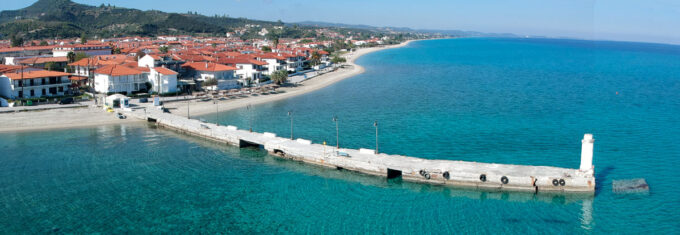
Pier in Pefkochori Southern Kassandra, as the natural maritime extremity of ancient Pallene, was never a random or marginal landscape. Its geography—low-lying coasts, sandy coves, wetlands, and points offering uninterrupted visibility across the Toroneos Gulf—favoured early human activity, primarily of a seasonal nature. The presence of wetland formations, such as modern Glarokavos, points to areas…

Nea Skioni

Nea Skioni and harbour Nea Skioni is a modern coastal village on the Kassandra peninsula whose very name is a deliberate link to the ancient city of Skione that once stood nearby. In practical terms, today’s settlement grew around the shore where seasonal fishing activity already existed, and it gradually became the permanent community and…

Sani

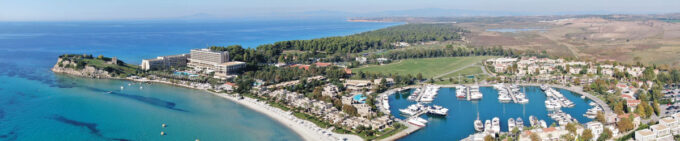
Cape and tower of Sani The Kassandra Peninsula, known in antiquity as Pallene, is one of the most historically active areas of Halkidiki. Its position between the Thermaic Gulf and the Toronean Gulf gave it long-lasting strategic, maritime, and political importance. Within this setting, Sani, on the western side of the peninsula, illustrates how this…