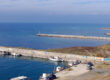


Cape and tower of Sani
The Kassandra Peninsula, known in antiquity as Pallene, is one of the most historically active areas of Halkidiki. Its position between the Thermaic Gulf and the Toronean Gulf gave it long-lasting strategic, maritime, and political importance. Within this setting, Sani, on the western side of the peninsula, illustrates how this importance was expressed through settlement, defence, and land use across different historical periods.
Archaic and Classical Periods: Pallene as a Political and Maritime Front
In antiquity, Pallene was densely settled, hosting powerful cities such as Potidaia, Mende, Skione, and Afitis. These were not marginal communities, but autonomous city-states with fortifications, harbours, and naval capacity, actively involved in the networks of the northern Aegean.
During the Peloponnesian War, the Kassandra Peninsula became a direct theatre of conflict between Athens and Sparta. The revolt and siege of Potidaia (432–430 BC) and the harsh punishment of Skione show that the peninsula acted as an active political agent, not merely as a passive battleground.
Within this wider framework lies ancient Sani (Sane), generally associated with a coastal or peri-coastal settlement in the area of today’s headland. Archaeological indications suggest a site connected to maritime activity and possibly open-air cult practice, reflecting the strong nautical and religious character of Pallene.
Macedonian and Roman Periods: Integration and Economic Continuity
Following its incorporation into the Macedonian kingdom in the 4th century BC, Pallene gradually lost its political autonomy but retained its economic and strategic value. The peninsula remained productive and well connected to regional maritime routes.
Under Roman rule, the area became part of the province of Macedonia, and although major road axes bypassed the peninsula, coastal installations and rural estates flourished. In the Sani area, archaeological evidence points to Roman villae rusticae, later adapted or reused during the Early Christian period, indicating continuity of land exploitation and settlement.
Byzantine and Medieval Periods: Defence, Monastic Presence, and Sani Tower
In Byzantine and later medieval times, Kassandra functioned as a coastal zone of surveillance and defence, protecting the approaches to Thessaloniki and the northern Aegean. This role led to the development of towers, fortified points, and agricultural estates connected to monastic landholding.
The most prominent monument in this context is the Sani Tower, traditionally associated with a monastic estate of Mount Athos, often linked to the Monastery of Stavronikita. The tower served multiple purposes:
- defending farmland,
- supervising the coastline,
- and storing produce,
embedding Sani firmly within the monastic and defensive landscape of medieval Halkidiki.
Modern Period: Destruction, Decline, and Transformation
During the Greek War of Independence (1821), Kassandra played an active role in the uprising of Chalkidiki under Emmanouel Pappas. The suppression of the revolt brought severe destruction, massacres, and depopulation, leaving lasting scars on the peninsula.
In the decades that followed, the area experienced gradual recovery, while the 20th century—especially the post-war period—marked a decisive shift towards tourism and seasonal settlement. Today, Kassandra and Sani are modern destinations, yet the Sani Tower remains a visible reminder of the peninsula’s long and layered past.
Sights of the Kassandra Peninsula
- Potidaia Isthmus and Canal – A key geographical and historical point highlighting the strategic importance of Kassandra from antiquity to the present.
- Sani Tower – A medieval monument linked to an Athos monastic estate, symbolising the peninsula’s defensive and agrarian past.
- Afitos (traditional settlement) – A well-preserved stone-built village with strong local architecture and historical continuity.
- Coastal landscapes and headlands – Sandy beaches, low rocky capes, and pine forests shaping the maritime geography of the peninsula.
- Small chapels and former monastic estates – Scattered traces of Byzantine and post-Byzantine presence in the hinterland.
Flavours of the Kassandra Peninsula
Homemade desserts and spoon sweets – Small but characteristic expressions of village hospitality.
Fresh fish and seafood – Cuisine closely tied to the coastal identity of Kassandra.
Grilled meats and traditional casseroles – Inland dishes reflecting Macedonian culinary traditions.
Olive oil, olives, and Halkidiki honey – Local products with a constant presence in everyday cooking.
Meze dishes for tsipouro or wine – Simple flavours linked to the region’s social food culture.