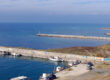


The channel in Nea Potidaia
Antiquity: Ancient Potidaea and the Isthmus of Kassandra
The history of Nea Potidaia begins in ancient Potidaea, a powerful city founded around 600 BC by settlers from Corinth at the narrow isthmus linking the mainland to the Kassandra Peninsula. This position gave Potidaea exceptional strategic value, controlling both land routes and the maritime passage between the Thermaic Gulf and the Toroneos Gulf. From its earliest days, the city functioned as a key military and commercial hub, guarding access to one of the most fertile and sheltered peninsulas of northern Greece.
During the Classical period, Potidaea became entangled in the great power struggles of the Greek world. Although originally a Corinthian colony, it fell under the influence of Athens and later revolted, triggering events that contributed to the outbreak of the Peloponnesian War in 431 BC. The city endured sieges, changes of control, and population shifts, reflecting its importance in regional politics. Even in antiquity, the isthmus itself was engineered: ancient sources refer to early attempts at cutting or improving a canal across the narrow land bridge, allowing ships to avoid the long circumnavigation of Kassandra.
Hellenistic and Roman Periods: Engineering and Defence
Following the decline of the Classical city, Potidaea entered a new phase under the Macedonian Kingdom, particularly during the reign of Kassander, who refounded the nearby city of Cassandreia in the late 4th century BC. The canal across the isthmus was improved and formalised during this period, serving both naval logistics and commercial traffic. The site remained valuable not as a large urban centre, but as a strategic choke point controlling movement between sea and land.
Under Roman rule, the region enjoyed relative stability, and the canal continued to be maintained, primarily for military and transport purposes. Roman engineers strengthened existing works rather than creating monumental new structures, integrating the passage into the wider road and maritime networks of Macedonia. While Potidaea never regained its former Classical prominence, its location ensured continuous occupation and relevance.
Byzantine Era: Fortifications and the Justinian Wall
The importance of the isthmus became even more pronounced during the Byzantine period, when the defence of peninsulas and coastal approaches was vital against raids and invasions. In the 6th century AD, during the reign of Emperor Justinian I, a massive defensive wall was constructed across the isthmus, incorporating and protecting the canal. Known today as the Justinian Wall, this fortification transformed the narrow land bridge into a fortified gateway controlling access to Kassandra.
The canal itself remained operational, while the surrounding fortifications housed garrisons and customs points. Nea Potidaia’s area functioned less as a town and more as a military and defensive zone, ensuring that Kassandra could be sealed off in times of danger. Remains of these Byzantine walls are still visible today, offering tangible evidence of the site’s strategic role during Late Antiquity.
Ottoman Period: Decline and Survival
Following the Ottoman conquest of Macedonia in the 15th century AD, the fortified isthmus gradually lost its military significance. Changes in warfare and trade routes reduced the importance of canal-based defence, and maintenance declined. The area became sparsely populated, serving mainly local agricultural and fishing needs rather than strategic objectives.
Despite this decline, the memory of the canal and walls persisted, and the isthmus continued to function as a natural and administrative boundary. Small settlements survived nearby, while the ruins of ancient and Byzantine structures remained embedded in the landscape, quietly marking the historical continuity of the site.
Modern Era: Refugees, Reconstruction, and the Bridge
The modern village of Nea Potidaia was founded in 1922, when Greek refugees from Asia Minor were resettled in the area following the Asia Minor Catastrophe. The name deliberately revived the ancient Potidaea, reconnecting the new settlement with the deep historical roots of the place. During the 20th century, the canal was dredged and stabilised, transforming it into the recognisable waterway seen today.
A decisive moment came in 1970, with the construction of the first bridge over the canal, finally providing a permanent road connection between the mainland and the Kassandra Peninsula. Later expansions created parallel bridges to accommodate growing traffic, turning Nea Potidaia into the sole road gateway to Kassandra. What was once a fortified boundary and naval passage became a vital artery for tourism, commerce, and daily life in Halkidiki.
Why Visit Nea Potidaia
Beyond its historical significance, Nea Potidaia is an ideal gateway base for exploring Halkidiki, with immediate access to both the Thermaic and Toroneos gulfs. The village combines seaside walks, fishing harbours, and long beaches on either side of the isthmus, while nearby archaeological remains add depth to what might otherwise seem like a simple coastal stop.