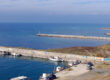


Nea Moudania harbour
Before the modern Nea Moudania was founded in 1922, there existed an ancient town in Asia Minor, Moudania, known today as Mudanya. This once-thriving coastal town, located on the Sea of Marmara, had a rich history stretching back to antiquity. Moudania played a crucial role in the Byzantine and Ottoman periods and was known for its strategic importance as a port town.
In the Ottoman era, Moudania was a prosperous settlement, serving as a key trading hub between Europe and Asia. Its economy was based on agriculture, fishing, and shipping, and the region was renowned for its fertile soil, producing a variety of fruits and vegetables. Moudania’s proximity to the major city of Bursa made it an important regional player in the empire, and it became home to a diverse mix of Greek, Turkish, and Armenian communities.
However, in the aftermath of the Greco-Turkish War (1919–1922), Moudania, like many other Greek towns in Asia Minor, experienced tremendous upheaval. With the signing of the Lausanne Treaty in 1923, the Greek population was forced to leave. This marked the end of centuries-old Greek presence in Asia Minor, and Moudania was no exception. The community, devastated by the population exchange, had to abandon their homes and livelihoods, finding refuge across the Aegean in places like Nea Moudania.
The Founding of Nea Moudania
In a land barren of their ancient homes, the refugees from Moudania in Asia Minor brought with them memories of their lost town, their traditions, and their skills as sailors, farmers, and merchants. The settlement of Nea Moudania, founded just a few years later, became a place of resilience and rebirth. As the town grew, its residents recreated the community spirit that had existed in Moudania, though the physical link to the old town remained severed.
Today, Nea Moudania stands not only as a modern Greek town but as a living symbol of the displacement and adaptation that defined the lives of so many Greek refugees. The new town’s harbour, economy, and culture reflect the resilience of its people, who rebuilt their lives in a foreign land, while cherishing the memories of their ancestral Moudania.