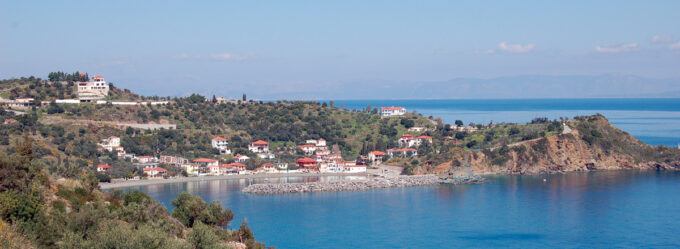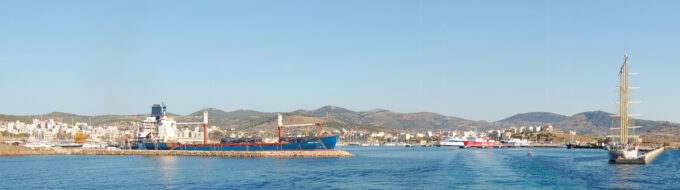
Markópoulo

From the 15th century BC. up until the defeat of the Hellenes by the Romans, Markópoulo was known by the name Myrrinoús. After that, the town started to decline and during the Byzantine years there were only a few rural settlements in its place. Around the 15th century AD, the family of Giánnis Markópoulos settles…

Monemvasiá

Monemvasia, from the Greek words meaning “single entrance”, takes its name from the narrow access linking the fortified town to the mainland. In antiquity, the site was known as Akra Minoa, possibly reflecting early maritime activity associated with the Minoans or its position at the limits of their influence. The dramatic rock formation took its…

Gérakas

Gerakas, a deeply indented and fully sheltered inlet in the southeastern Peloponnese, is one of the safest natural harbours in the region. Its fjord-like shape made it an ideal anchorage from antiquity, as well as a point of control over maritime routes along the coast between the Argolic and Laconian gulfs. In antiquity, the area…

Kyparíssi

Kyparissi, a secluded and particularly picturesque settlement in southeastern Peloponnese, retains a strong sense of authenticity, as for centuries it was accessible primarily by sea. The main village lies slightly inland, while its coastal extensions function as its natural harbour, forming a close relationship between land and sea. The area has been inhabited since antiquity,…

Fokianós

Fokianos Bay, located along the rugged and isolated coastline of the eastern Peloponnese, is one of the most distinctive natural formations of the region. Its deep indentation and natural shelter from northerly winds have long made it a safe anchorage, known to mariners navigating this exposed stretch of coast. The surrounding area did not develop…

Ástros

Astros, located inland along the northern coast of the Argolic Gulf, and Paralio Astros, its coastal harbour settlement, are closely connected both geographically and historically. The name of the area is most likely derived from the medieval castle that dominates the hill above the town, known as the Castle of Astros, possibly linked to the…

Lávrio

Lávrio, in ancient Greek, means wealth. That was the name the ancient Athenians gave to the city, to signify how rich the mines in Lávrio were. From the 6th up until the 4th century BC, the Athenians used Lávrio as a mine – city for the extraction of silver. After the 4th century BC., the…

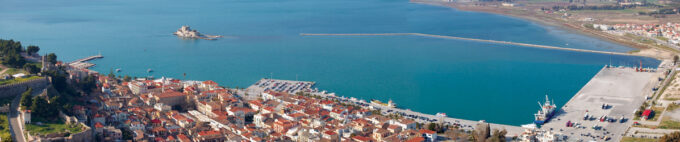
Náfplio

The town of Nafplio takes its name from the mythical Nauplius, son of Poseidon, a figure deeply connected with the sea and navigation. In Homeric tradition, Nauplius appears as a clever and resourceful character, moving among royal courts. According to myth, he was entrusted with eliminating unwanted women, yet instead of killing them, he helped…