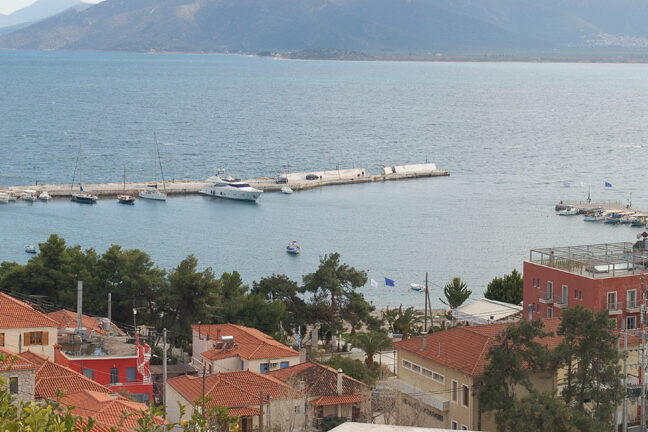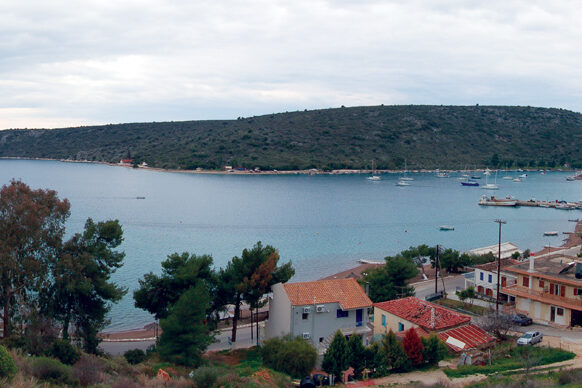


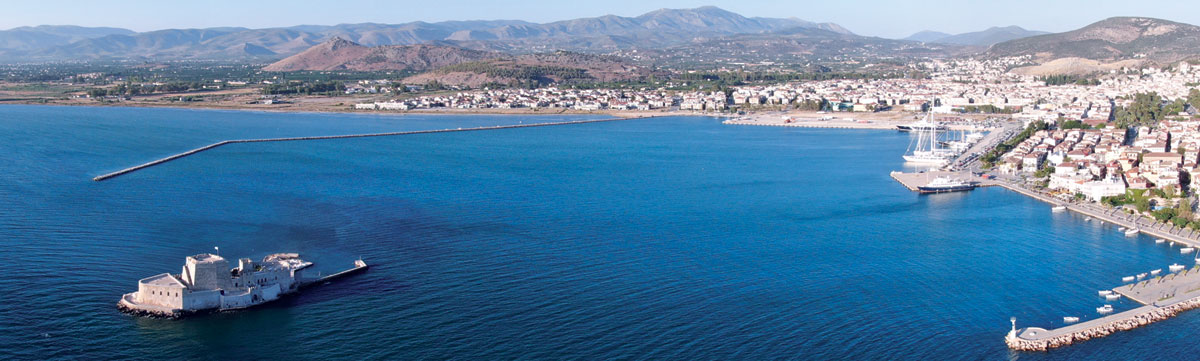
The northern coastline of the Argolic Gulf, stretching from Iria to Astros, is one of the most historically rich maritime regions of the Peloponnese. This area lies at the heart of ancient Argolis, one of the most important centres of the Mycenaean world, where powerful cities such as Mycenae and Tiryns once flourished. The coastline, with its open bays and sandy shores, offered natural anchorages, while the gentle inland terrain allowed easy access to the major urban centres of antiquity.
At the centre of the region stands Nafplio, a town with continuous presence from ancient times to the present day. According to mythology, it was founded by Nauplius, son of Poseidon, reflecting its strong connection to the sea. In antiquity Nafplio served as a harbour for the Argolid, while in medieval and modern times it developed into an important administrative and military centre. Its imposing fortifications, including Palamidi and Akronafplia, testify to its strategic importance throughout history.
Along the coast, areas such as Drepano, Tolo and Iria developed as small coastal settlements serving fishing and local navigation. Tolo, facing the islets of Romvi and Daskalio, has functioned as a natural anchorage since antiquity, while in modern times it was settled by populations relocated after the Greek War of Independence. The coastline is characterised by gentle forms, sandy beaches and sheltered bays, making it particularly favourable for navigation.
Further west, towards Paralio Astros, the coast becomes more varied, with small headlands and alternating coves. Astros, situated near the estuary of the Tanos River, also holds importance in modern Greek history, as it was the site of the Second National Assembly of the Greeks in 1823, during the War of Independence. From the ancient harbours of Argolis to the formative moments of the modern Greek state, this coastline remains a place where sea routes and history are continuously intertwined.