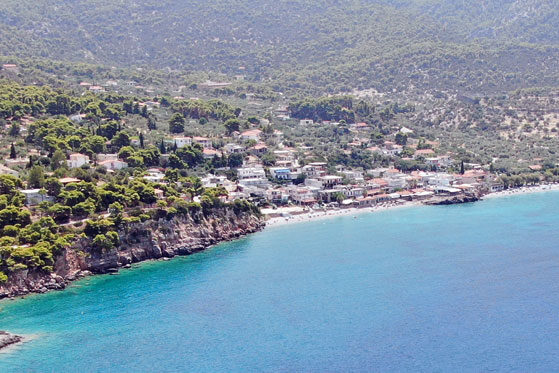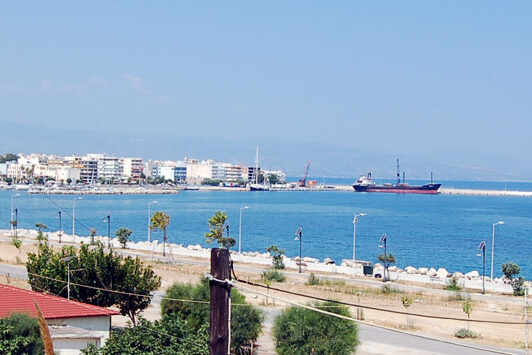


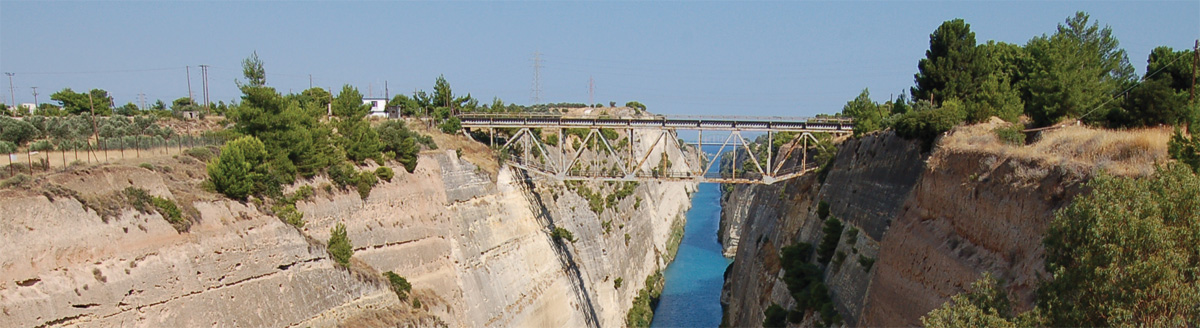
The eastern Corinthian Gulf, stretching from Corinth to the Alkyonides Gulf and Paralia Saranti, is a coastline where geography and history intertwine. The region lies at the natural meeting point of the Peloponnese, Megaris and Boeotia, which gave it strategic importance from early antiquity. Mountain passes between the Geraneia, Cithaeron and Pateras ranges led inland to central Greece, while the small coves along the shore served as minor maritime nodes for navigation and trade in the Corinthian Gulf.
The history of the area is inseparable from ancient Corinth, one of the most powerful city-states of the ancient Greek world. Built on the Isthmus between the Saronic and Corinthian Gulfs, the city became by the 7th century BC a major naval and commercial power, establishing colonies and controlling maritime routes across the Mediterranean. Its influence extended along the northern Corinthian coast, where small harbours and anchorages supported coastal trade and communication.
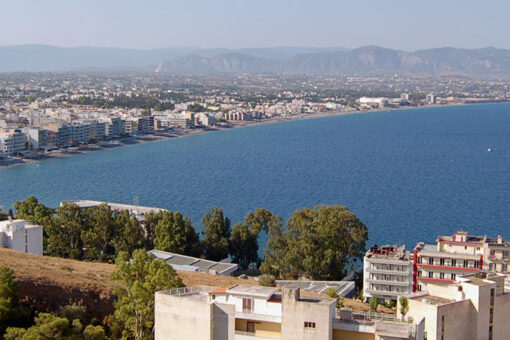
Just north of Corinth lies a place long associated with water and healing. Modern Loutraki stood in antiquity on the site of Thermae, named after its natural thermal springs, which were already known for their therapeutic qualities. The tradition of bathing continued through the centuries, and the town later developed into one of Greece’s best-known spa resorts.
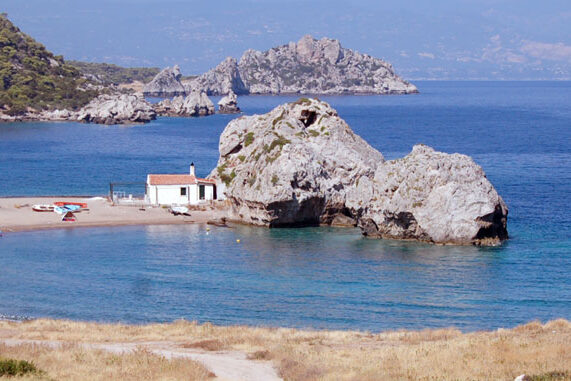
At the end of the Perachora peninsula stands one of the most important sanctuaries of early Corinthian civilisation: the Heraion of Perachora. Dedicated to the goddess Hera, this coastal sanctuary was active from at least the 9th century BC and served both religious life and the maritime world of the gulf. Overlooking a sheltered cove, the site illustrates how ancient sanctuaries were often linked symbolically with the sea and seafaring.
Further east, along the Megarian coast, lie the striking ruins of Aigosthena, near modern Porto Germeno. This ancient settlement functioned as a fortified port of Megara, controlling the route from Boeotia to the Corinthian Gulf. Its imposing walls and towers, largely dating to the 4th century BC, remain among the best-preserved ancient fortifications in Greece.
During the Roman and Byzantine periods the coastline continued to serve as a maritime corridor. Small bays around the Alkyonides Gulf and today’s Paralia Saranti provided shelter for fishermen, traders and travellers. The mountains descending steeply to the sea create a coastline of alternating capes and coves, offering both natural refuge and occasionally challenging navigation.