


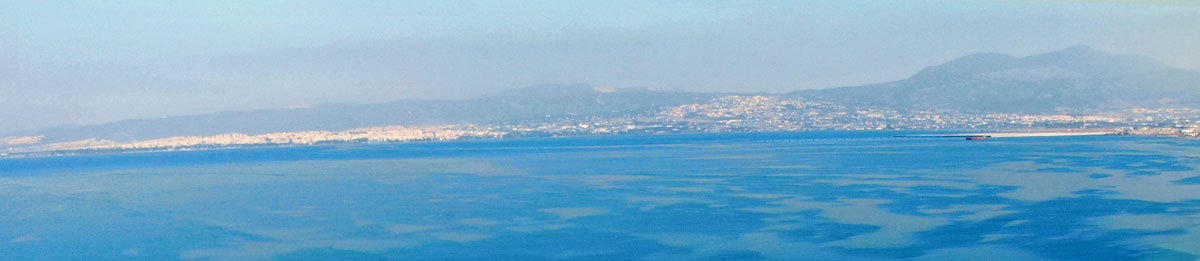
Thessaloniki, from S
Thessaloniki was founded in 315 BC by Cassander, king of Macedon, who unified several smaller coastal settlements around the Thermaic Gulf into a new, powerful city and named it after his wife, the half-sister of Alexander the Great. The city’s position, at the head of a naturally sheltered gulf and on the axis linking Macedonia with southern Greece and the Balkan hinterland, constituted from the outset its greatest strategic advantage.
Already in the Hellenistic period, Thessaloniki developed into a significant commercial and maritime hub, with an organised harbour and stable sea connections throughout the Aegean. The Thermaic Gulf functioned as the natural maritime gateway of Macedonia, allowing safe anchorage and fostering trade in grain, timber and mineral resources.
Roman Period – Metropolis of Macedonia
Following the Roman conquest of Macedonia in 168 BC, Thessaloniki rapidly emerged as the capital of the Roman province of Macedonia. The passage of the Via Egnatia through the city turned it into a key station between the Adriatic and the Aegean, seamlessly linking land and maritime transport networks.
Its harbour acquired imperial importance, serving the supply of armies, the movement of administrative officials and the circulation of goods across the eastern Mediterranean. Roman naval detachments used the Thermaic Gulf as a safe anchorage, while the city largely avoided destruction thanks to its loyal stance towards Rome.
Early Christian Era – A Spiritual Centre
During the 1st century AD, Thessaloniki became one of the first European cities to receive the Christian message, through the preaching of the Apostle Paul. His Epistles to the Thessalonians testify to a dynamic and multicultural community, in which Greeks, Romans and Jews coexisted.
In the centuries that followed, the city evolved into a major Christian centre, marked by the construction of large basilicas, foremost among them that of Saint Demetrios, the city’s patron saint. At the same time, the harbour retained a vital role in the movement of pilgrims, goods and troops, making Thessaloniki one of the best-connected cities of the Eastern Roman Empire.
Byzantine Thessaloniki – The “Co-Reigning City”
During the Byzantine period, Thessaloniki rose to become the second most important city of the empire after Constantinople, earning the title “Co-Reigning City”. Its powerful walls, combined with the maritime protection offered by the Thermaic Gulf, made it a crucial defensive stronghold against attacks from both land and sea.
The city was repeatedly targeted by naval and amphibious assaults, mainly by Slavs and Arabs, most notably the sack of AD 904 by Arab pirates who entered from the sea. This event highlighted both the importance and the vulnerability of the harbour, leading to the strengthening of maritime fortifications.
Medieval Prosperity and Cultural Flourishing
Despite sieges and attacks, Thessaloniki remained a vibrant economic and cultural centre throughout the Middle Byzantine period. Its workshops, markets and harbour sustained trade networks stretching from the Aegean to the Black Sea.
The region also supported shipbuilding activity, with small and medium-sized vessels serving local and regional transport needs. The city functioned as a maritime gateway to the Balkans, controlling trade routes that linked northern lands with the Aegean Sea.
Late Byzantine Period and Transitional Rule
During the 14th and 15th centuries, Thessaloniki stood at the centre of conflicts between Byzantines, Serbs and Ottomans, while for a brief period it came under Venetian administration (1423–1430). Venice’s primary interest lay in the control of the harbour, which it regarded as vital to its naval presence in the northern Aegean.
In AD 1430, the city was captured by the Ottomans, marking the end of the Byzantine era. Despite the change of rule, Thessaloniki retained its role as a major port and commercial hub, adapting to new political and economic realities.
Ottoman Thessaloniki – A Multicultural Port
Under Ottoman rule, Thessaloniki developed into one of the most important cities of the empire in the Balkans. Its harbour handled the trade of grain, tobacco and textiles, while the settlement of Sephardic Jews in the 15th century gave the city a strongly multicultural and multi-religious character.
Maritime activity remained central to urban life: merchant ships from across the Aegean and the eastern Mediterranean called regularly at the port, while the Thermaic Gulf continued to provide natural protection and operational flexibility.
From Liberation to the Greek State
Thessaloniki was liberated in 1912, during the First Balkan War, and incorporated into the Greek state, assuming a new role as Greece’s principal gateway to the Balkans. Its harbour became a key strategic and economic asset, serving both military and commercial needs, while the city experienced rapid population growth.
The Great Fire of 1917 destroyed much of the historic centre, including areas close to the harbour. The reconstruction that followed, based on the urban plan of Ernest Hébrard, shaped the modern cityscape and redefined the urban relationship with the sea.
First World War – The City of the Army of the East
During the First World War, Thessaloniki was transformed into a vast Allied military base, serving as the headquarters of the Army of the East. The harbour was used intensively for the disembarkation of troops, supplies and vehicles, making the city one of the most important maritime hubs in the Mediterranean at the time.
Within the Thermaic Gulf, naval accidents and ship sinkings occurred, mainly due to minefields and operational congestion. Several wrecks from this period still lie on the seabed, bearing witness to the city’s intensely militarised wartime role.
Interwar Period and Refugee Transformation
Following the Asia Minor Catastrophe of 1922, Thessaloniki received tens of thousands of refugees, profoundly reshaping its demographic and social structure. New districts developed around the harbour and the western approaches to the city, strengthening industrial and commercial activity.
The port evolved into a key export hub, particularly for tobacco and agricultural products from Macedonia, while simultaneously acting as an entry point for cultural and economic influences from Europe.
Second World War – Occupation and Destruction
During the German occupation (1941–1944), Thessaloniki suffered severe losses, most tragically the annihilation of its Jewish community, which had formed a fundamental part of the city’s identity for centuries. The harbour was placed under military control and used for transport and supply operations.
Within the Thermaic Gulf, ships were sunk during Allied attacks, and upon the German withdrawal significant damage was left to port infrastructure. Post-war recovery was prolonged but decisive for the city’s economic revival.
Modern Thessaloniki – Port, Culture and Identity
In the post-war decades, Thessaloniki developed into Greece’s second-largest urban centre and a major cultural and educational hub. The harbour was modernised, maintaining its role as the principal commercial port of Northern Greece while also hosting cultural activities.
Today, the city’s relationship with the sea remains vital: the waterfront promenade, marinas and maritime facilities form an integral part of daily life, while the Thermaic Gulf continues to shape the city’s identity and character.
Maritime History and Sea-Related Points of Interest
Thessaloniki was not merely a commercial harbour but also a strategic maritime focal point during key historical periods. From Byzantine-era Arab raids to twentieth-century Allied operations, the Thermaic Gulf repeatedly served as a theatre of naval activity.
Of particular interest are the shipwrecks dating to the two World Wars, as well as the historic port installations that attest to centuries of maritime use. Although most wrecks are not accessible, they form an important part of the area’s underwater heritage.
Sightseeing
- White Tower: The city’s emblematic landmark and former coastal fortification, closely associated with the defence of the harbour.
- Byzantine Walls and Upper Town: Panoramic views over the Thermaic Gulf and a vivid sense of fortified Thessaloniki.
- Rotunda and Arch of Galerius: Roman monuments reflecting the city’s imperial past.
- Church of Saint Demetrios: Thessaloniki’s most important Byzantine shrine and a symbol of historical continuity.
- Seafront and New Waterfront: The modern public space that reconnects the city with the sea.
Flavours
The cuisine of Thessaloniki reflects its multicultural history, blending Macedonian, Asia Minor, Jewish and Balkan influences. Dishes such as soutzoukakia, savoury pies and seafood from the Thermaic Gulf form core elements of the local gastronomy.
A distinctive role is played by the city’s markets and traditional meze tavernas, especially around the harbour and historic centre, where everyday life meets culinary tradition. Thessaloniki continues to embody the character of a lively gastronomic crossroads.


