


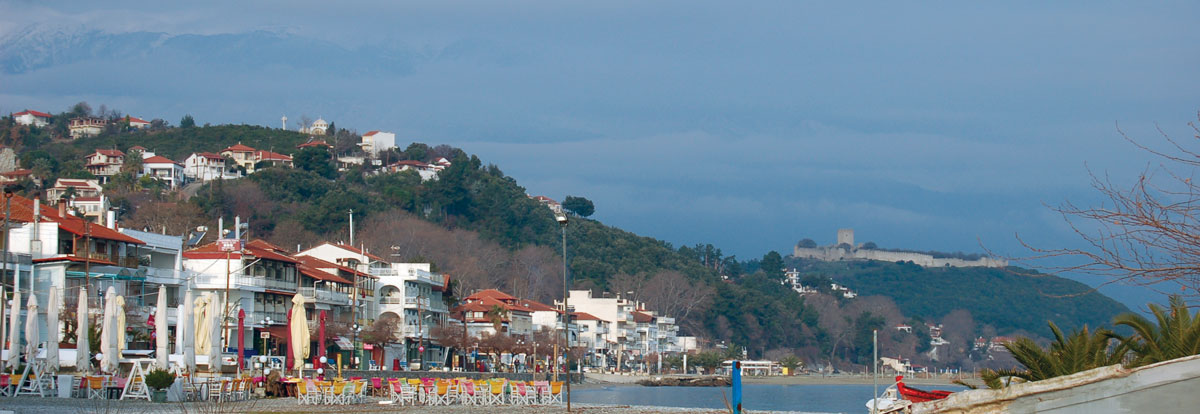
Platamon and Castle
Platamon lies in an area of long-standing strategic importance, controlling the coastal passage between Macedonia and Thessaly at the foot of Mount Olympus. From antiquity, this corridor linked southern and northern Greece by land and sea, making the wider area significant for movement, trade, and defence. Although the modern settlement developed much later, archaeological and historical evidence shows continuous activity in the surrounding region during Hellenistic and Roman times, closely connected to the routes of the Tempe Valley.
During the Byzantine period, Platamon gained particular prominence with the construction of the Castle of Platamon, which dominated both the coastal road and the sea lanes of the Thermaic Gulf. The fortress passed through successive phases of Byzantine, Frankish, and Ottoman control, reflecting the persistent military value of the site. The present-day town expanded mainly in the 20th century as a seaside settlement, while the castle remains the most visible reminder of Platamon’s medieval past.
Sightseeing
- Castle of Platamon: A well-preserved Byzantine fortress dating mainly to the 13th century, offering commanding views over the Aegean Sea and Mount Olympus.
- Platamon Beach: A long sandy shoreline directly connected to the town, combining coastal scenery with views of the castle above.
- Old Panteleimon (Palaios Panteleimonas): A traditional mountain village nearby, notable for its restored stone houses and Macedonian architecture.
- Historic railway line Piraeus–Thessaloniki: Passing through the area, it highlights the enduring transport significance of Platamon within Greece’s north–south axis.


