

The town of Megara, situated between the Saronic Gulf and the Corinthian Gulf, is one of the oldest settlements of western Attica. Its name has remained unchanged from antiquity to the present day, something rather rare for a Greek city with such a long history. The origin of the name is interpreted in two ways: according to one tradition it derives from the mythical hero Megareus, son of Poseidon and king of the city, while another interpretation links it to the “megara”, the sanctuaries of the goddess Demeter, whose worship was ancient and particularly strong in the region.
The area has been inhabited continuously since the Neolithic period, and during the archaic era (9th–6th centuries BC) Megara developed into an important city-state competing with the neighbouring powers of Athens and Corinth. At that time the Megarians possessed a strong navy and founded colonies in several regions of the Greek world, including Sicily, the Propontis and the Black Sea. The city took part in the major conflicts of the ancient world, including the Persian Wars and the Peloponnesian War, in which it sided with Sparta.
Megara is also regarded as the birthplace of comedy. During the festivals dedicated to the god Dionysus, the inhabitants performed lively processions and dances, improvising humorous songs and satire aimed at their fellow citizens. From these lively performances emerged the theatrical genre of comedy. The Megarian Susarion (6th century BC) is considered the father of comedy, having introduced the first metrical comic performances and spreading them throughout Attica.
After the Roman conquest in 146 BC, Megara gradually lost its former political importance. During the Byzantine period the city suffered repeated raids and destruction, while piracy became a serious threat during the Ottoman era. For centuries the inhabitants lived in constant fear of pirate attacks, hiding their possessions and seeking shelter whenever ships appeared on the horizon. In the mid-17th century the Venetians captured the city and killed a notorious pirate who had been terrorising the area.
In 1770, during the Orlov Revolt, the people of Megara actively joined the uprising against the Ottomans. When the Russians later reached an agreement with the Ottoman authorities, the town suffered severe reprisals. During the Greek War of Independence in 1821, Megara again played an active role in the struggle. Today it is a lively town of around 30,000 inhabitants, preserving a strong historical identity.
Sights
Archaeological Site of Megara
Remains of the ancient city reveal the importance of Megara as a powerful classical Greek city-state.
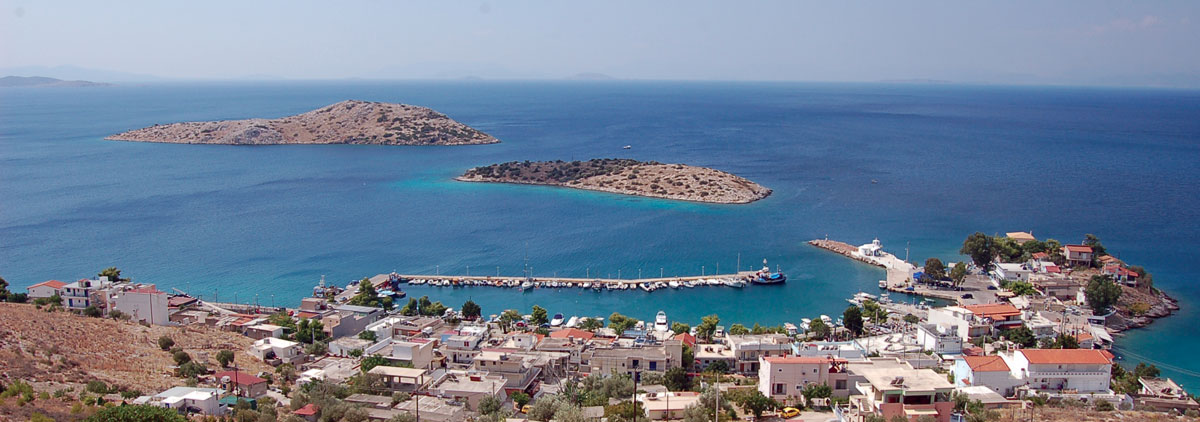
Ancient Harbour of Nisaea
Nisaea served as the ancient harbour of Megara on the Saronic Gulf. Remains of the harbour structures still recall the city’s strong maritime tradition.
Ancient Fortifications
The city was protected by impressive defensive walls that connected Megara with its harbour at Nisaea.
Old Town of Megara
The modern town still preserves elements of traditional architecture, with small streets, squares and churches forming its historic centre.
Flavours
Traditional Pies of the Megaris Region
Local cuisine features a variety of homemade pies prepared with simple ingredients from the surrounding countryside.
Grilled Meats and Local Produce
The fertile plain of Megaris supplies the local cuisine with high-quality meat, vegetables and dairy products.
Local Wine and Meze
Meals are typically accompanied by local wine or retsina, creating the relaxed atmosphere of a traditional Greek table.