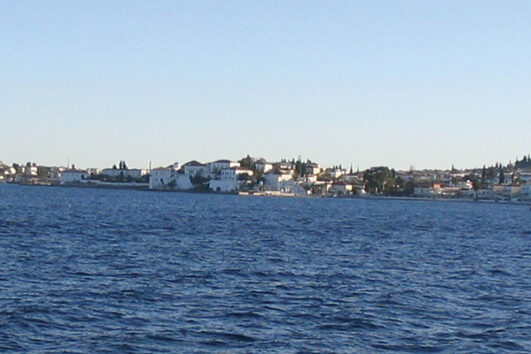


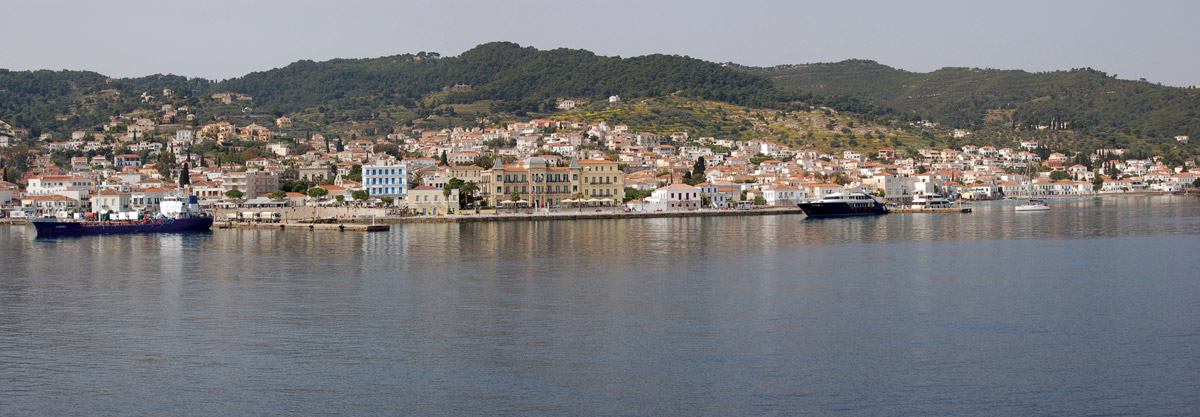
Dápia harbour, Spétses, from NE
At the southeastern entrance of the Saronic Gulf, where the waters open toward the Argolic Gulf, lies the island of Spetses together with the opposite Argolic coast, from Koilada to Porto Cheli. This area has long formed an important maritime passage for vessels travelling between Attica, Argolis and the Cyclades. Numerous sheltered coves along the mainland coast provided natural anchorages, while the island of Spetses itself occupied a strategic position along the sea routes of the region.
Spetses has been inhabited since antiquity and was known to ancient writers as Pityousa, a name probably derived from the pine forests that once covered much of the island. During the Hellenistic and Roman periods it served as a modest but useful station for seafarers. Its most significant historical development, however, came in the 18th and early 19th centuries, when the inhabitants of Spetses became skilled sailors and shipowners, building a substantial merchant fleet active throughout the Mediterranean.
During the Greek War of Independence in 1821, Spetses played an important role in the naval struggle against the Ottoman Empire. The island possessed an experienced fleet and many capable seamen, and it was the home of the legendary Laskarina Bouboulina, one of the most prominent figures of the Revolution. Ships from Spetses participated in numerous naval engagements across the Saronic and Aegean seas, contributing significantly to the maritime efforts of the Greek rebels.
Opposite the island lie the quiet Argolic shores, with small settlements such as Koilada and Porto Cheli, which have long provided natural shelter for vessels navigating these waters. In antiquity the nearby area hosted the city of Halieis, an important maritime settlement that flourished from around the 7th century BC. Today the region remains closely connected with the sea, combining its long nautical tradition with some of the most peaceful coastal landscapes of the Argolid.