


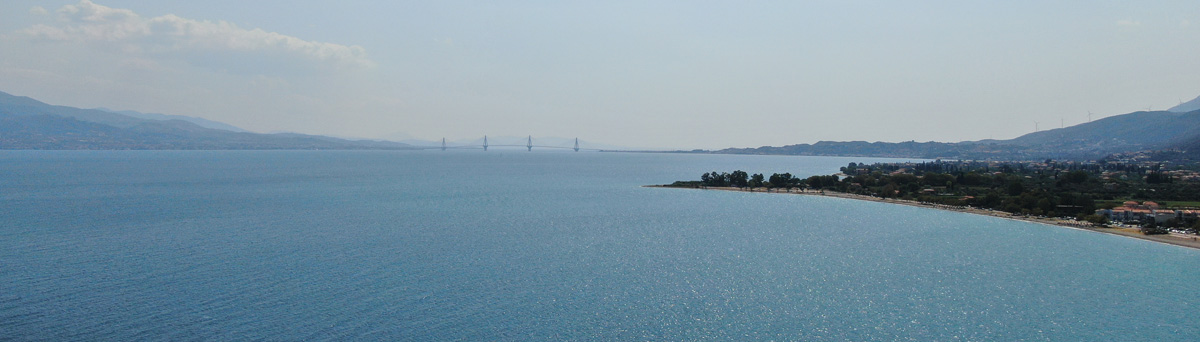
The western reaches of the Corinthiakos Gulf, from Aigio to the sheltered waters of the bay of Agios Nikolaos, form a landscape where mountain and sea meet in dramatic contrast, and where history unfolds quietly but persistently across millennia. Unlike the more politically dominant eastern gulf, this region developed as a corridor of passage, trade, and naval movement, linking the Peloponnese with western Greece and the Ionian Sea.
In antiquity, Aigio (ancient Aigion) stood as one of the principal cities of the Achaean League, a powerful confederation of city-states during the Hellenistic period. Here, political assemblies took place and decisions were made that influenced the balance of power across southern Greece. The coastline westwards, though less urbanised, was dotted with smaller settlements and natural anchorages, serving local trade and fishing communities. Across the gulf, the lands of Aetolia and Lokris formed both neighbours and rivals, their histories intertwined through alliances and conflict.
The strategic importance of the region became more evident during the Roman period, when the Corinthian Gulf served as a key maritime route between the eastern Mediterranean and the Adriatic. Ports along this stretch, though modest, functioned as stepping stones in a wider imperial network, facilitating communication and commerce. Yet it was not until the medieval period that one harbour would rise to prominence above all others—Nafpaktos.
Known in antiquity as Naupaktos, meaning “place of shipbuilding”, the town owed its name and early importance to its role as a naval station. Its sheltered harbour and commanding position made it a prize for successive powers. Under Byzantine rule, it remained an important fortified port, but it was during the Venetian period that Nafpaktos reached its peak, transformed into a heavily fortified maritime stronghold guarding the entrance to the gulf.
This strategic role culminated in one of the most decisive naval engagements in Mediterranean history: the Battle of Lepanto (1571 AD). Fought just outside the gulf’s entrance, near Nafpaktos, the battle saw the fleets of the Holy League confront the Ottoman Empire, marking a turning point in naval warfare and halting Ottoman expansion westward. Though the battle itself took place beyond the immediate coastline, Nafpaktos became forever associated with this historic clash, its name echoing across European history.
In the centuries that followed, the region passed between Ottoman and Venetian control, before eventually becoming part of the modern Greek state during the Greek War of Independence (1821–1829). The coastline remained largely rural, its settlements shaped more by local seafaring, agriculture, and small-scale trade than by grand political developments. Even today, this character endures: a place of quiet harbours, traditional communities, and understated historical depth.
Along this stretch, smaller locations such as Erateini, Panormos, and the unique island of Trizonia reflect a continuity of maritime life that stretches back centuries. The Bay of Agios Nikolaos, with its calm waters and natural protection, exemplifies the timeless appeal of the Corinthian Gulf as a refuge for sailors—a role it has fulfilled since antiquity.


