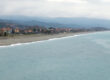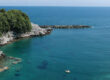


Chorefto beach and fishing harbour
Zagora, built amphitheatrically on the eastern slopes of Mount Pelion, shows continuous human presence even though the first clear references under its present name appear in the 13th century. Archaeological finds point to habitation since antiquity, while in the medieval period the area was organized around monastic nuclei, most notably the Monastery of the Transfiguration (Sotira), which gradually became a spiritual and social landmark. The possible Slavic origin of the name (“Za-gora”, meaning “behind the mountain”) aptly describes the village’s protected position on the mountain’s seaward side.
During the late Byzantine and early post-Byzantine centuries, Zagora acquired cohesion as a community; already by the 14th century, under alternating Venetian and Catalan influence in Magnesia, stable commercial networks developed. Access to the Aegean via the cove of Chorefto would prove decisive for the village’s advancement in the following centuries.
The flourishing of Zagora under the Ottoman Empire
Between the 17th and 19th centuries, Zagora evolved into one of the economically strongest villages of Pelion. The Ottoman administration granted it significant privileges, including the prohibition of permanent Turkish settlement within the village, a factor that allowed the rise of a dynamic Greek class of merchants, shipowners and artisans.
Its prosperity stemmed from two main pillars:
Silk and wool textile production
Zagora became a major silk-producing center. Multiple recorded sources speak of dozens of tons of silk annually, exported to Venice, Dalmatia, Germany and other European markets. Silkworm cultivation, processing workshops and household weaving created wealth and social mobility.
The “Zagorian ships” and the maritime economy of Chorefto
Chorefto, Zagora’s natural seaport, developed into one of the most important provincial harbors of the Aegean. From here sailed the renowned “Zagorian ships,” which traveled not only across the Aegean and the Black Sea but reached Egypt, Russia, Asia Minor, Scandinavia, West Africa and even Brazil. Zagora acquired a prosperous merchant class, elegant mansions, large ecclesiastical establishments and public works reflecting its social ascendancy.
The harbor of Chorefto was central to this growth: it exported silk, wool textiles and Pelion products, and imported raw materials, manufactured goods and ideas. Maritime activity shaped the identity of the inhabitants for at least three centuries.
Education and intellectual flowering – The School of Zagora and Rigas Feraios
Economic prosperity enabled Zagora to invest early in education. In the early 18th century the Ellinomouseio (Greek School) was founded, becoming one of the foremost educational institutions of Thessaly. Its rich library amassed thousands of volumes, scholarly editions and Enlightenment-era manuscripts.
Rigas Feraios in Zagora
Rigas Velestinlis (Feraios), visionary of Greek and Balkan liberty, studied at the school of Zagora. His time here shaped a significant part of his intellectual formation: he came into contact with classical texts, European thought and teachers who encouraged rationalism and critical thinking.
Zagora, as a center of learning, contributed to the ferment that would later underpin Rigas’ revolutionary writings, his cartographic work and the political ideals he articulated. The School and the Historical Library, still active today, remain living witnesses of this cultural climate.
From traditional economy to the modern era
The 19th century brought significant change: industrial textile production in Europe reduced the value of local silk, maritime transport shifted patterns, and the commercial networks of Zagorian merchants contracted. Chorefto gradually lost its function as a commercial port, and the 20th-century road connection with Volos shifted movement from sea routes to land routes.
Zagora adapted: in 1916 the Agricultural Cooperative of Zagora was founded, which eventually focused on apple cultivation. From the 1960s onwards, “Zagorin” apples gained national and international recognition, and in 1996 they were granted PDO status. Agriculture, combined with developing tourism and the village’s rich cultural heritage, shaped Zagora’s modern identity.
Agios Ioannis
Agios Ioannis is the coastal settlement of the Zagora–Mouresi hinterland and traditionally functioned as a small fishing haven and access point for the mountain villages to the sea. Although it lacks a rich independent historical record, it followed the trajectory of its surrounding communities: links to Pelion’s maritime outlets, modest participation in fishing and coastal trade, and later transformation into a modest holiday and tourist settlement.
Today, Agios Ioannis retains the character of a quiet seaside locality, which is touristically significant thanks to its large sandy beach.
Sighseeing
1. The Historical Library of Zagora
Home to thousands of volumes, early prints and archival material related to Rigas Feraios and the intellectual history of Pelion. It is the most significant cultural institution of the region.
2. The four quarters of Zagora
Agia Kyriaki, Agia Paraskevi, Agios Georgios and Sotira. Each quarter features large churches, plane-tree squares and mansions reflecting the prosperous period of Zagorian society.
3. Chorefto and its maritime past
The beach and small cove where the Zagorian ships once anchored; today it offers wide Aegean views and serves as a departure point for trails leading to Damouchari and Mouresi.
4. Church of the Transfiguration (Sotira)
A historic religious center with notable architecture, functioning as a spiritual nucleus of the village since the 12th century.
5. Pelion’s traditional paths
Stone-paved routes linking Zagora – Mouresi – Damouchari – Agios Ioannis, offering access to natural landscapes, ravines, springs and old commercial routes.
Flavours
1. Zagora apples (PDO “Zagorin”)
The signature taste of the region. Starking Delicious apples offer a crisp, balanced acidity and symbolize the village’s modern agricultural identity.
2. Local spoon sweets & preserves
Quince, apple, chestnut and wild cherry — products reflecting Pelion’s rich mountainous terrain.
3. Traditional Pelion cuisine
Greens pies, spentzofai, bean soup and slow-cooked dishes with chestnut or apple echo the agrarian gastronomic tradition of Zagora.
4. Seafood in Chorefto and Agios Ioannis
Fresh fish, calamari, anchovies and meze dishes that connect the mountainous Pelion character with the Aegean coastal culture.