

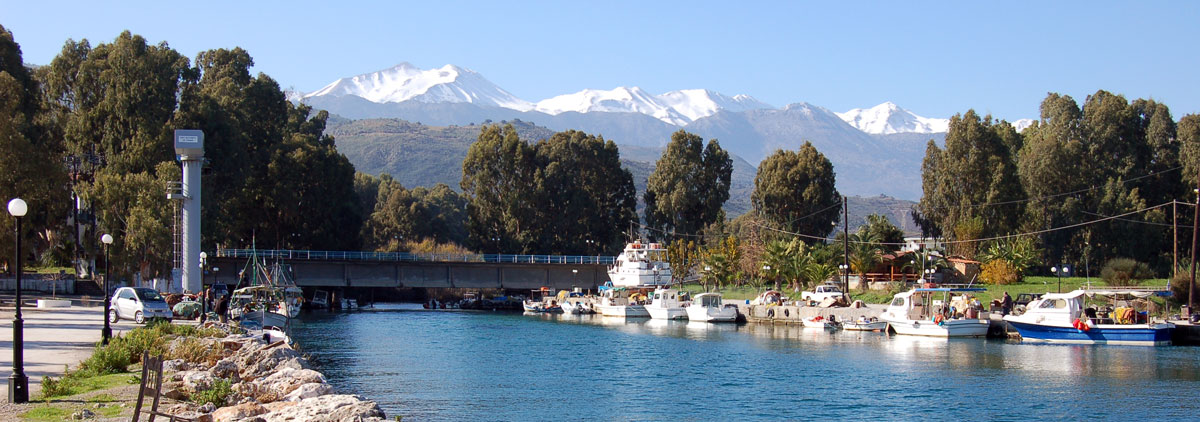
Northern Crete forms the historical spine of the island. Facing the Aegean and opening toward mainland Greece and the wider Mediterranean, this coast has, for millennia, been Crete’s principal political, economic and maritime axis. From the deep natural harbour of Souda to the shores of Hersonissos, the northern littoral has witnessed the rise of palatial civilisation, Roman administration, Byzantine resilience, Venetian fortification, Ottoman upheaval and modern transformation.
Prehistory and the Minoan Zenith (7000 – 1100 BC)
Human presence along northern Crete dates back to the Neolithic period (c. 7000 BC), when early farming communities settled fertile plains watered by seasonal rivers descending from the White Mountains and Mount Ida.
By c. 2000 BC, the northern coast became the heart of the Minoan civilisation. At Knossos, just south of present-day Heraklion, arose the largest and most complex of the Minoan palaces. Far more than a royal residence, Knossos functioned as an administrative, religious and economic centre coordinating agricultural production, maritime trade and craft industries.
During the Middle and Late Minoan periods (c. 1700 – 1450 BC), the palace reached its architectural and artistic zenith. Multi-storey buildings, advanced drainage systems, frescoes of marine life and ceremonial courts reflected a society both technically sophisticated and outward-looking. The northern harbours connected Knossos to Egypt, the Levant and mainland Greece.
The eruption of Thera around 1600 BC disrupted eastern Mediterranean trade networks, and by 1450 BC many palatial centres were destroyed. Mycenaean Greeks from mainland Greece subsequently occupied Knossos, introducing Linear B script — the earliest written form of Greek. By 1100 BC, the palatial system had collapsed, ushering in a new era of decentralised settlement.
Dorian Cities and Classical Crete (c. 1100 – 69 BC)
In the centuries that followed, northern Crete evolved into a mosaic of independent city-states. Among the most prominent were Knossos, Kydonia (modern Chania) and Lyttos inland.
These cities developed fortified acropoleis and distinctive political systems. Governance frequently rested in the hands of magistrates known as kosmoi, elected annually. The island’s legal traditions became renowned in antiquity, particularly the inscriptional law code of nearby Gortyna.
Although northern Crete did not play a decisive role in the Persian Wars, Cretan mercenaries gained a formidable reputation as archers across the Hellenistic world.
Maritime trade remained vital. Northern harbours facilitated exchange between the Aegean, North Africa and Asia Minor, reinforcing the region’s outward orientation.
Roman Administration and Early Christianity (69 BC – 330 AD)
Roman forces conquered Crete in 69 BC, incorporating it into the province of Crete and Cyrenaica. While Gortyna became the administrative capital, the northern ports remained essential to commerce and communication.
Road networks linked coastal cities with inland agricultural zones. Villas, baths and aqueducts reshaped urban landscapes.
Christianity reached Crete early. Around 66 AD, according to tradition, the Apostle Paul visited the island and appointed Titus as bishop. By the 4th century AD, northern Crete had become firmly integrated into the Christianised Eastern Roman world.
Byzantine Crete and the Arab Emirate (330 – 961 AD)
Under Byzantine rule, northern coastal cities were fortified against increasing Arab naval activity.
In 824 AD, Andalusian Muslim exiles seized the island and established an emirate. They constructed a formidable fortified capital at Chandax (modern Heraklion), protected by walls and a defensive moat. For more than a century, the emirate controlled northern Crete, using it as a naval base for operations across the Aegean.
In 961 AD, the Byzantine general Nikephoros Phokas reconquered the island after a determined campaign. Chandax was retaken and heavily fortified. Byzantine authority was restored, and northern Crete resumed its role as a defensive outpost of the empire.
Venetian Candia and the Cretan Renaissance (1204 – 1669 AD)
Following the events of 1204 AD, Crete passed into Venetian hands and became the Kingdom of Candia. Northern Crete, with Candia (Heraklion) as its capital, became the administrative and military centre of Venetian power in the eastern Mediterranean.
The Venetians constructed some of the most formidable fortifications in Europe. The massive walls of Candia, built over more than a century, transformed the city into an almost impregnable bastion. Chania and Rethymno were similarly fortified, their harbours expanded and arsenals constructed.
Despite periodic revolts, Venetian rule also fostered remarkable cultural development. The 16th century witnessed the flowering of the Cretan Renaissance, blending Byzantine traditions with Italian humanism. Painters, scholars and poets emerged from Candia and Rethymno, linking Crete to wider European currents.
The long Siege of Candia (1648 – 1669 AD) marked the climax of Ottoman-Venetian rivalry. After twenty-one years, the city capitulated, ending Venetian sovereignty.
Ottoman Rule and Resistance (1669 – 1898 AD)
Under Ottoman administration, northern Crete’s urban fabric changed. Churches were converted into mosques; new minarets rose above Venetian walls. Demographic shifts occurred as segments of the population converted to Islam.
Yet resistance remained persistent. Revolts during 1821, 1841, 1866–69 and 1897 frequently centred on the northern cities and nearby mountainous districts.
The sacrifice at the Monastery of Arkadi (1866 AD), near Rethymno, became an enduring symbol of defiance. The explosion that followed Ottoman assault reverberated across Europe, strengthening philhellenic support.
In 1898 AD, following unrest in Heraklion and international intervention, Ottoman rule ended. Crete became an autonomous state under the supervision of the Great Powers.
Union, War and Modern Transformation (1913 AD – Present)
In 1913 AD, Crete formally united with Greece. The raising of the Greek flag at the Fortress of Firka in Chania symbolised political fulfilment after centuries of struggle.
In May 1941 AD, northern Crete became a primary theatre of the Battle of Crete. German airborne forces targeted the airfields at Maleme and Heraklion. The resistance of Greek, Allied and civilian forces was fierce. Although the island fell, German losses were so severe that large-scale airborne assaults were never again undertaken in the same manner.
Post-war decades brought reconstruction, expansion of Heraklion as a metropolitan centre, and rapid development of tourism along the northern coastline.
Heraklion
Heraklion stands on layers of history stretching back to the Minoan port of Knossos. Known as Chandax under the Arabs and Candia under the Venetians, it became one of the most heavily fortified cities in Europe. The immense Venetian walls still encircle the historic centre, while the harbour and arsenals recall its maritime importance. Today, Heraklion is Crete’s largest city — a dynamic urban hub where archaeological treasures, Byzantine churches, Ottoman remnants and modern commerce coexist.
Rethymno
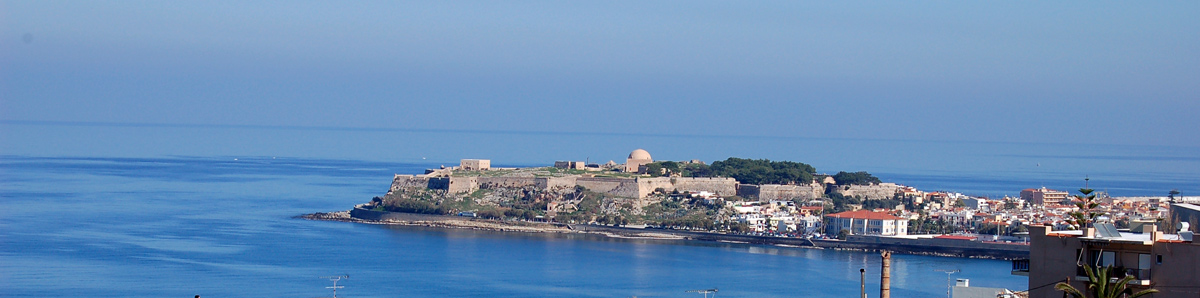
Rethymno, situated between Chania and Heraklion, preserves one of the most harmonious Venetian-Ottoman urban landscapes in Greece. Its Fortezza dominates the town, while narrow streets reveal Renaissance façades, loggias and minarets. Historically a centre of letters and artistic production during the Cretan Renaissance, Rethymno today balances cultural heritage with academic life and tourism, retaining a distinctive intellectual atmosphere.
Flavours of Northern Crete
Dakos (Cretan Rusk Salad)
A traditional barley rusk lightly moistened and topped with tomato, soft mizithra cheese and generous extra virgin olive oil. Born from the need to preserve bread in maritime and agricultural conditions, it evolved into a symbol of Cretan simplicity and balance. Modest in appearance, yet deeply satisfying.
Apaki
Smoked pork marinated in vinegar and aromatic herbs such as savoury or sage. Traditionally prepared after the annual pig slaughter to preserve meat through winter months. Today it remains a distinctive northern Cretan meze, especially in mountain villages.
Cretan Graviera
A firm sheep’s milk cheese with a mild sweetness and rich aroma. Produced in upland districts around Psiloritis and the White Mountains, it matures for several months before consumption. It accompanies both everyday meals and festive gatherings.
Extra Virgin Olive Oil
The plains of Malevizi, Messara and Rethymno produce olive oil of exceptional quality, noted for low acidity and fresh herbal aromas. Olive cultivation in northern Crete dates back to the Minoan era. It forms the foundation of every local dish and the core of the regional diet.
Cretan Wines
Northern Crete is experiencing a strong revival of viticulture, featuring indigenous grape varieties such as Vidiano, Liatiko and Kotsifali. Modern winemakers blend tradition with contemporary expertise, producing wines of distinctive regional character. Viticulture here is documented as far back as the Bronze Age.
Tsikoudia (Raki)
A grape pomace spirit distilled each autumn following the harvest. The distillation gatherings — known as kazaniá — are communal events that reinforce social bonds. Tsikoudia accompanies hospitality, conversation and agreement alike.
Mizithra & Xinomizithra
Fresh cheeses made from sheep and goat milk, soft in texture and lightly tangy. They feature prominently in salads, pies and dishes such as dakos. These cheeses reflect the pastoral heritage of inland northern Crete.
Boubouristi Snails
Snails fried with rosemary and vinegar, a classic northern Cretan appetiser. Traditionally gathered after autumn rains, they represent a longstanding rural practice. The dish embodies both frugality and strong local identity.