


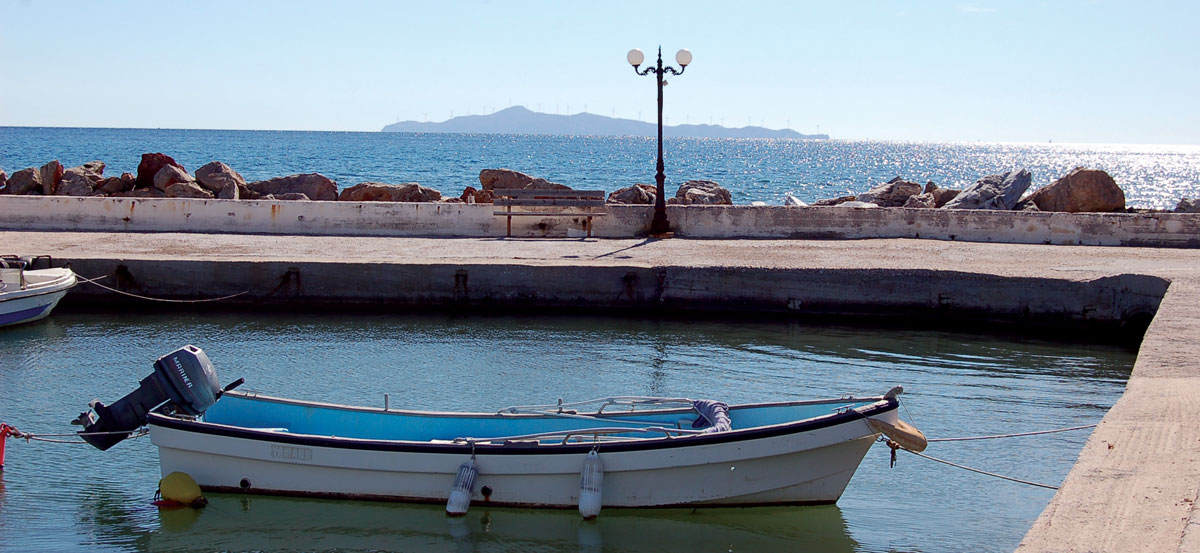
The island of Agios Georgios, also known to sailors as San Tzortzi, lies in the southern part of the Saronic Gulf between Attica and Hydra. It is a barren, mountainous and uninhabited island, surrounded by steep shores and deep waters. There are no natural bays suitable for shelter, and therefore the island has never served as an important anchorage.
In antiquity the island was known as Velvina, and is mentioned by ancient authors such as Strabo and Herodotus. Despite its small size, the island once hosted a settlement that even minted its own coins and produced barley, suggesting that agricultural exploitation was possible during that period. During the Roman era, its isolated position made it suitable as a place of exile for political prisoners.
During the period of Venetian rule, the island appeared on nautical charts under the name San Giorgio d’ Arbora, probably referring to a single tree that stood on the island’s ridge. It was also known as Capello di Cardinale, because the outline of this tree reminded sailors of the distinctive hat worn by Catholic cardinals.
After the Ottoman period and until roughly the late 20th century, the island was used for seasonal pastoral activity, with shepherds keeping flocks there. For this reason a large number of free-roaming goats and sheep still live on the island today. In the early 20th century the cheese produced there was particularly well known and highly sought after. For many years the island belonged to prominent Hydriot families.
Today Agios Georgios has acquired a completely different role, as the island now hosts a large wind farm stretching along its ridge and operated by TERNA Energy. Despite this modern development, the rocky island remains a distinctive landmark along the main sailing routes of the southern Saronic Gulf.