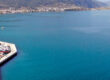


Aidipsos waterfront
Ancient Aidipsos: A Sacred Place of Waters
Aidipsos appears early in the written record. Ancient geographers like Strabo described the region’s “boiling waters,” and by the Classical period the springs were already famous across the Greek world. The name itself may derive from the mythical hunter Aedippos, but others link it to the word “adipsa,” meaning “thirst,” referring to the healing waters that “quench the thirst” of the body.
The ancients believed the springs had divine origins. Heracles, the hero most associated with physical strength and recovery, was said to bathe in these waters before his labors. This Heraclean connection persisted for centuries and shaped the identity of the town; several ancient baths and small sanctuaries dedicated to the hero have been found in the wider area.
During the Hellenistic period (3rd–1st century BC), Aidipsos experienced its first major development. The healing cult grew, guesthouses were built, and the site attracted the elite of mainland Greece and the Aegean. The waters were praised for treating exhaustion, joint pain, and battle injuries — ailments common in a warrior society.
Roman Aidipsos: Imperial Luxury and Monumental Baths
Aidipsos reached its golden age under Roman rule, when thermal spas became integral to daily life and leisure culture. Wealthy Romans, administrators, and intellectuals flocked here, and the town developed into one of the leading healing centers of the Eastern Mediterranean.
The archaeological remains testify to this prosperity. Monumental bath complexes were constructed with impressive engineering: vaulted rooms, hot and cold pools, marble floors, and sophisticated water channels. Some of these ruins are still visible today, scattered around the modern town or submerged near the coast.
Roman emperors themselves visited Aidipsos. Sulla, during the 1st century BC, famously came to seek relief from chronic gout and arthritis. Later, elite Romans — senators, generals, and high-ranking officers — adopted Aidipsos as a seasonal retreat, creating a cosmopolitan atmosphere that lasted until Late Antiquity.
The combination of healing water, seaside climate, and cultivated gardens made Aidipsos a prototype of the Roman “spa resort,” perhaps more so than any other Greek location.
Byzantine Aidipsos: Monastic Quiet and Regional Significance
With the fall of the Roman world, the large-scale bath complexes declined, but the springs themselves did not lose their importance. During the Byzantine era, Aidipsos transformed from a cosmopolitan Roman resort into a quieter monastic and local healing center.
Monasteries and hermitages in the broader region — notably around Agios Panteleimon and the hills above the town — cared for the sick using both prayer and the natural waters. The Byzantine state respected the springs as valuable regional resources, although large-scale imperial investment faded.
Despite occasional raids (especially by Slavs and later by pirates), the settlement survived. The waters continued to attract pilgrims and the ill, forming a spiritual–therapeutic tradition distinct from the Roman luxury bath model.
Medieval and Ottoman Period: Survival at the Edge
After the Fourth Crusade (AD 1204), Evvoia fell under Frankish and Venetian influence, and Aidipsos became part of a contested frontier zone between Latin lords, local Greek populations, and eventually the expanding Ottoman Empire.
By the Ottoman period, Aidipsos was a modest coastal village, but the springs maintained their reputation. Ottoman officials occasionally sought treatments here, and local Greek communities kept small bath structures functioning. Several travelers of the 17th and 18th centuries refer to the “boiling fountains” and note that villagers used the waters to cure chronic ailments.
Modern Aidipsos: From Royal Resort to Tourism Hub
Aidipsos experienced a dramatic rebirth during the 19th and early 20th centuries, after Greece regained independence. Scientists analyzed the springs, confirming their exceptionally high mineral concentration and therapeutic potential. Soon afterward, wealthy Athenians and foreign travelers began arriving, and the town entered a new golden age.
Between the 1890s and the 1930s, impressive neoclassical hotels and bathhouses were constructed. The grand Thermae Sylla, built in 1897, became one of the most celebrated spa hotels of its time, hosting kings, prime ministers, artists, and celebrities from Greece and abroad. Aidipsos became synonymous with luxury, health, and refined summer living.
Throughout the 20th century, the town expanded into one of Greece’s major spa destinations. Thousands of visitors — from elderly Greeks seeking therapeutic treatments to travelers attracted by the unique natural phenomena — continue to come every year. Despite modern challenges, the springs remain as vibrant and powerful as ever, producing more than 80 individual gushes with temperatures reaching 70–85°C.
In recent decades, Aidipsos has renewed its infrastructure, blending the classic spa heritage with modern wellness tourism, while also promoting surrounding natural and cultural attractions.
Sights
1. The Thermal Springs and Baths
The heart of Aidipsos. You can walk along the coast and see steaming waterfalls pouring directly into the sea — a rare natural phenomenon. Modern spa facilities, including the historic Thermae Sylla, offer therapeutic treatments based on the mineral waters.
2. Roman Baths (Archaeological Remains)
Scattered around the town, especially near the shore and the area of “Nisilas.” These ruins are the most tangible reminder of the town’s ancient prestige. Some parts are submerged, adding to the atmosphere.
3. The Cave of Sulla
A coastal rock shelter linked (traditionally) to the Roman dictator Sulla. Although partly symbolic, it highlights the long connection between Aidipsos and Roman healing traditions.
4. Church of Agios Panteleimon
Dedicated to the patron saint of healing, the church forms a spiritual counterpoint to the natural therapeutic environment of the springs.
5. Natural Coastline & Hot Water Beaches
Several beaches combine sea water with warm geothermal flows — a unique swimming experience. The sands are rich in minerals, and the temperature varies depending on the spring outflow.
6. Nearby Nature & Excursions
Aidipsos is an excellent base for exploring:
- Northern Evvoia’s forests and rivers
- The monasteries near Rovies
- The mountain villages of Orei and Istiaia
- The Venetian castle of Orei, overlooking a strategic coastal passage