


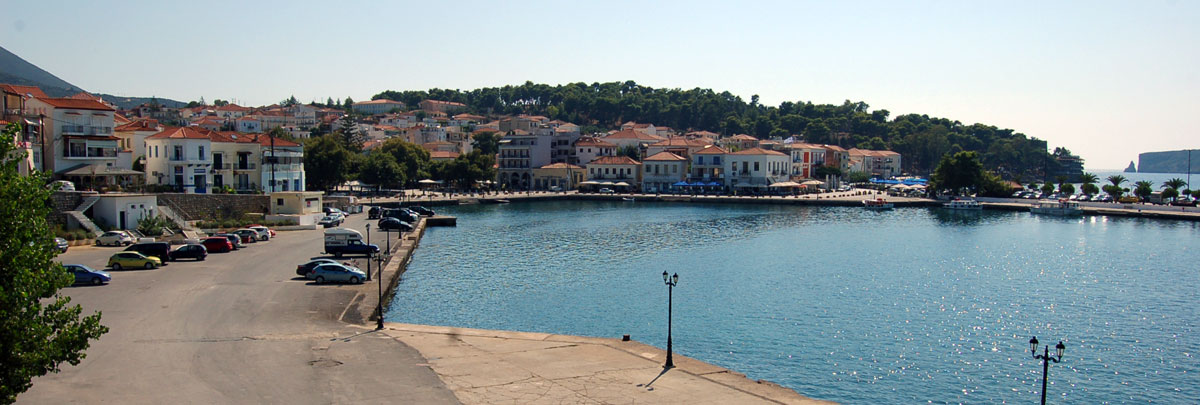
Pylos, waterfront
Few coastal landscapes in Greece combine such natural grandeur and historical depth as the Bay of Navarino and the town of Pylos. Sheltered by the great islet of Sphacteria, this deep, almost landlocked bay on the southwest coast of Messenia has witnessed battles, shipwrecks, empires, and legends since the dawn of Greek history. Its calm waters, so deceptively peaceful today, have for millennia reflected the passing of fleets—from Mycenaean galleys to Ottoman warships and European frigates.
Mycenaean Beginnings and Homeric Echoes
The area of Pylos was inhabited from very early times. Archaeological excavations at the site known as the Palace of Nestor, a few kilometers north of modern Pylos, revealed one of the best-preserved Mycenaean palaces in Greece, flourishing around 1300 BC. Its Linear B tablets record names, offerings, and even inventories of aromatic oils, giving a vivid glimpse of a sophisticated bureaucratic kingdom.
This palace is traditionally associated with King Nestor, the wise elder of Homer’s Iliad and Odyssey. Whether myth or history, the connection reflects the enduring prestige of Pylos in the Greek imagination. The surrounding hills and plains would have been home to a prosperous population of farmers and sailors whose ships traded across the Aegean and beyond.
The Mycenaean city was destroyed around 1200 BC, likely during the widespread upheavals that ended the Bronze Age. For centuries afterward, Pylos faded into obscurity, its ruins buried and its name living only in poetry.
Classical and Hellenistic Times
In the Classical period (5th–4th centuries BC), Pylos was part of the Messenian lands contested between Sparta and its neighbors. The bay’s strategic position drew attention during the Peloponnesian War. In 425 BC, the Athenian general Demosthenes landed at Pylos and fortified the headland at the modern “Old Navarino” (Paleokastro). Soon followed the Battle of Sphacteria, one of the war’s turning points. The Athenians trapped a Spartan garrison on the island of Sphacteria and forced their surrender — a humiliation that shocked all Greece and showed that Sparta was not invincible.
In Hellenistic times, Pylos belonged to the revived Messenian state, centered on the new capital of Messene (founded in 369 BC). It became a quiet port town again, while the great bay remained a safe harbor for passing fleets.
Roman and Byzantine Eras
Under Roman rule (from 146 BC onward), Pylos and Messenia prospered within a peaceful empire. The bay’s natural shelter made it a convenient stop for ships sailing between Italy and the eastern Mediterranean. During the Byzantine period, Pylos—then known as Avarinos—was part of the province of Peloponnesos. It was fortified and sometimes raided by Slavs and Saracens, but the tranquil geography always lured life back to its shores.
By the 10th century AD, the area was again under firm Byzantine control, with local agriculture and fishing sustaining small coastal settlements.
Frankish, Venetian, and Ottoman Rule
After the Fourth Crusade (1204 AD), the region passed under Frankish domination, forming part of the Principality of Achaea. In the late 13th century, the Venetians—who sought safe harbors for their eastern trade—began to value Navarino’s bay. They called it Navarino, perhaps from a corruption of “Avarinos,” and fortified its northern promontory with the strong castle still known as Paleokastro.
When the Ottomans expanded into the Peloponnese in the 15th century, Navarino became a frontier fortress contested between the two maritime powers. In 1573, shortly after the Battle of Lepanto, the Turks constructed the imposing Neokastro (New Castle) at the southern entrance of the bay, one of the best-preserved Ottoman fortresses in Greece. Its high walls, bastions, and gate still dominate the modern town of Pylos.
Through the following centuries, Navarino changed hands repeatedly between Venice and the Ottoman Empire, reflecting the volatile politics of the eastern Mediterranean. By the 18th century, it was a modest garrison town and anchorage, awaiting its return to the center stage of history.
The Greek War of Independence and the Battle of Navarino (1827 AD)
Navarino’s greatest moment came on October 20, 1827 AD, during the Greek War of Independence. A combined fleet of Britain, France, and Russia entered the bay to enforce peace and to prevent Ottoman-Egyptian forces from destroying the Greek revolt. The Ottoman–Egyptian fleet, anchored inside the bay, opened fire—and the battle erupted.
The Battle of Navarino was the last great naval engagement fought entirely with sailing ships. In a few hours, the allied fleet annihilated the Ottoman and Egyptian armada. Over sixty enemy ships were sunk or burned, and thousands of sailors perished. The victory was decisive: it broke Ottoman naval power in the region and ensured the eventual independence of Greece.
Today, memorials in Pylos and simple plaques by the sea honor the sailors who fell on both sides, while the calm bay hides their sunken ships beneath its waters.
Modern Pylos
In the years that followed, Pylos became part of the modern Greek state. Its layout, with neoclassical houses along the seafront and the great square shaded by plane trees, reflects 19th-century town planning inspired by the French general Maison, whose troops briefly occupied the area after the battle. The harbor continues to serve fishing boats and yachts, while above it rise the massive walls of Neokastro—now restored and housing a museum and the underwater archaeology center.
